The Department of Animal Physiology, Ecophysiology and Enzymology is one of the three departments of the Institute of Experimental Physiology and Biochemistry at the Institute of Biology. The department was founded by Prof. Dr. Risto Buzalkov, and his successor is Prof. Dr. Slavcho Mitev. Today, this department employs two full professors (Prof. Dr. Suzana Dinevska - Kjovkarovska and Prof. Dr. Biljana Miova) and one assistant (Assoc. Prof. Elena Rafailovska).
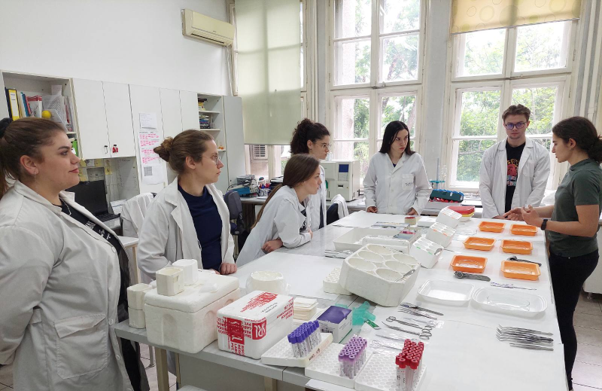
The teaching activity of this department begins with the subject Comparative (Animal) Physiology, followed by Animal Ecophysiology, and and later on by teaching the following subjects - Enzymology, Applied Physiology, Introduction to Laboratory Methods, Nutrition and Metabolism, Animal Cell Culture and Ecotoxicology, all these for first-cycle students, as well as a large number of subjects for second- and third-cycle students at the Institute of Biology.
Scientific and research activity - Since the beginning of the establishment of the department, it has been recognized for research in the field of animal physiology and ecophysiology, and more specifically, the influence of high environmental temperature on a number of physiological mechanisms in homeothermic organisms (white laboratory rats), with a special emphasis on their acclimatization to a moderate hyperthermic environment. In this research area, the effects at the level of carbohydrate metabolism, as well as at the level of some endocrine glands and hormones (primarily at the level of the thyroid and adrenal glands) have been examined. All these changes have been monitored at the biochemical level (enzyme activity and substrate concentration) and later at the molecular level (changes in gene expression of key proteins) at the level of different tissues and organs (liver, kidney, heart, muscle, pancreas). Recent research in this area has focused on heat preconditioning, cross-tolerance and changes in gene expression of stress proteins (heat shock proteins – HSP),
The research work of the department was later expanded into the field of experimental diabetes in animal models of laboratory rats. In this area, a series of studies have been carried out on the treatment of experimental diabetes with some pharmacological inducers of HSP (nicotinamide and aspirin), as well as treatment with various plant extracts that possess antihyperglycemic effects. Of note are the studies on the potential antihyperglycemic effects of extracts from transgenic roots of Hypericum perforatum L. and CBD oil on enzymes and substrates of carbohydrate metabolism, redox processes, as well as changes at the level of a number of signaling pathways associated with diabetes.
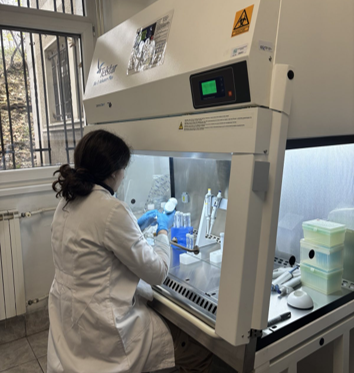
The latest research of this department is in the field of animal tissue culture. Namely, as a result of the implemented BioMakerSpace project (financed by the Macedonian Innovation Fund, and as the carrier the Macedonian Biological Society), in 2024 a Laboratory for Animal Tissue Culture was established. The education of the employees of the department in techniques in this field was realized at the Faculty of Medicine in Valencia (Spain). In the past period, the department has also undertaken certain research activities in the field of ecotoxicology and the accumulation of heavy metals in various tissues and organs in individuals from a natural population.
The Department of Animal Physiology, Ecophysiology and Enzymology has extensive and fruitful scientific research work, a large number of scientific research projects and study stays of the teaching staff have been implemented, since its establishment until today. In the last 20 years, about 6 doctoral dissertations, about 15 master's theses and more than 40 diploma theses have been successfully defended. The results obtained from the scientific research activity of the department have been published in domestic and international journals (about 45 papers, of which 35 in journals with an impact factor), as well as about 70 participations in domestic and international congresses and conferences in the last 20 years.