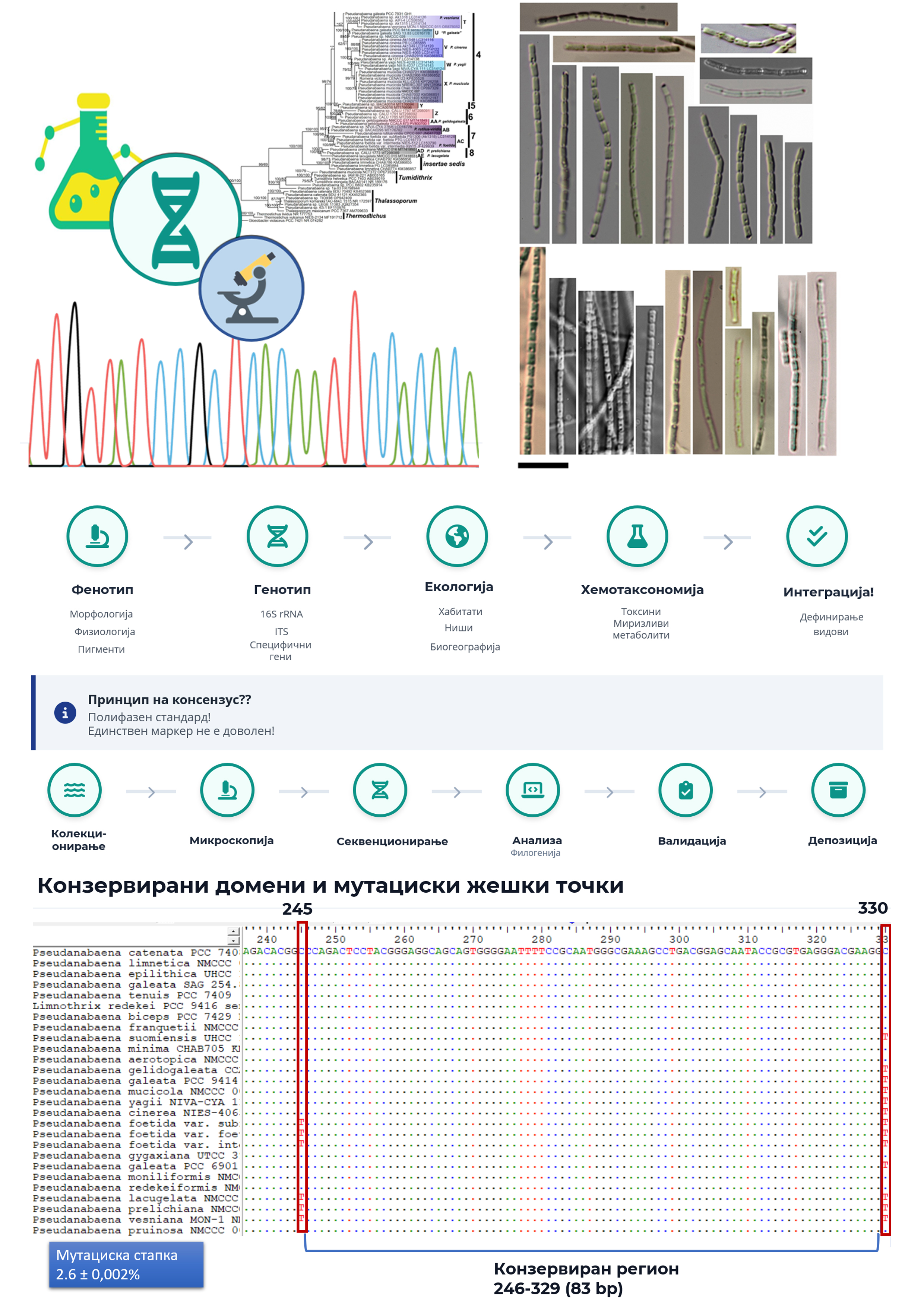
The Department of Hydrobiology, Systematics and Biotechnology of Algae (Prof. Dr. Svetislav Krstic, Prof. Dr. Zlatko Levkov, Assis. Prof. Dr. Boris Aleksovski, and curator M.Sc. Danijela Mitic-Kopanja) focuses on the complex taxonomy, systematics, molecular biology, phylogeny, phylogenetics, and evolution of algae, with a particular emphasis on diatoms (Bacillariophyta) and cyanobacteria (Cyanobacteriota). To this end, the Department employs the modern, so-called comprehensive "polyphasic" approach, in which molecular biology analyses form the basis of scientific knowledge, which are then correlated with data on the strain’s morphology, ultrastructure, and ecology. Additionally, attention is paid to algal diversity, biogeography, ecology, potential harmful effects on ecosystems, and paleoecological aspects.
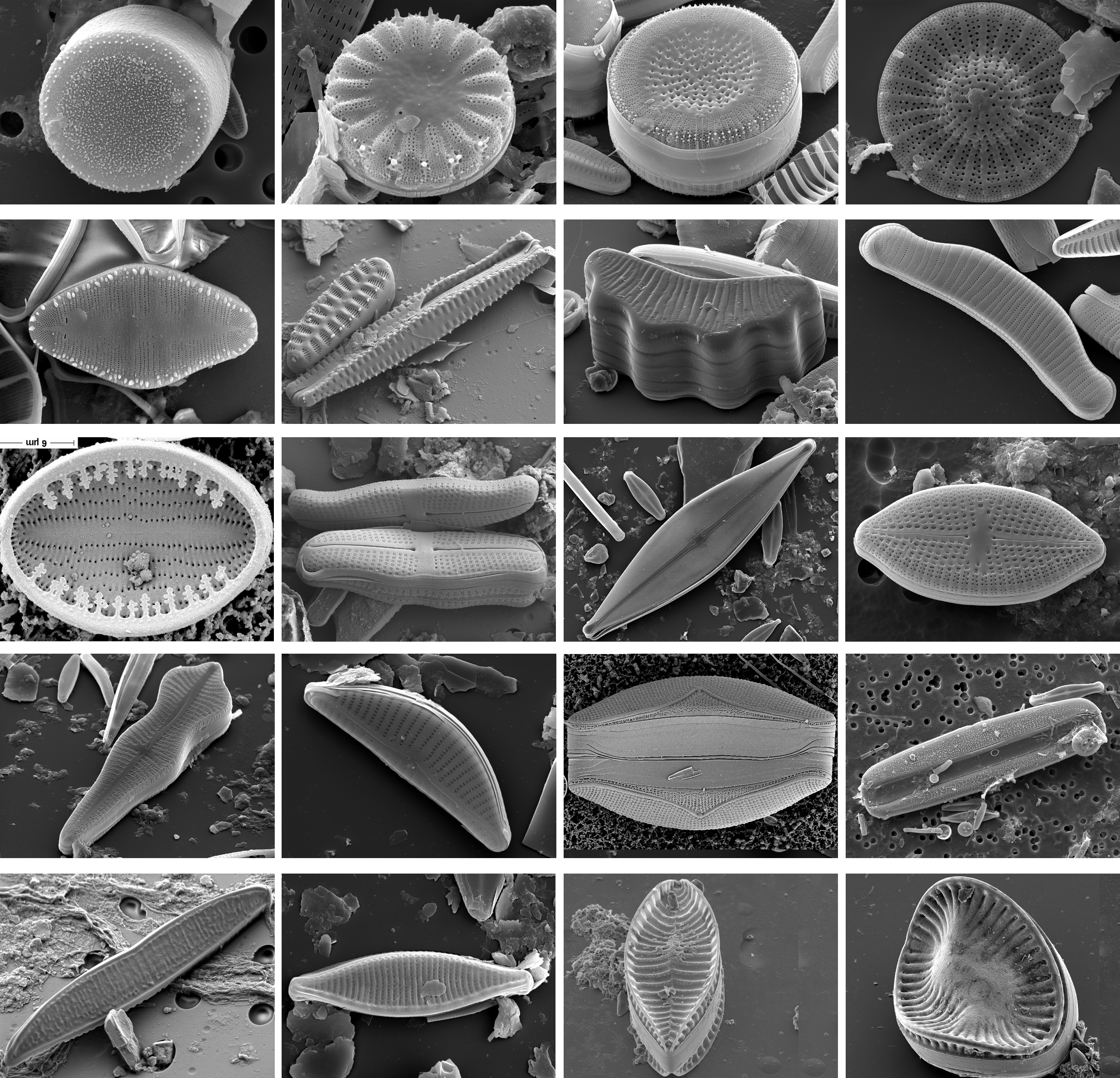
The Laboratory for Hydrobiology, Systematics and Biotechnology of Algae was established in 2000 and has modern equipment for light microscopy, including differential interference contrast (DIC) microscopy and Nomarski visualization, phase contrast, and epifluorescence microscopy. In addition to light microscopy analyses aimed at determining morphological characters and phenotypic plasticity, transmission electron microscope (TEM) analyses are also performed in cooperation with institutions in the country and abroad to detect ultrastructural characters and evaluate intracellular structures. Scanning electron microscope (SEM) analyses are also conducted, which are particularly important for diatoms.
The laboratory provides conditions for isolation of unialgal strains, their growth and cultivation under controlled in vitro conditions, and their conservation and maintenance in a viable state. Part of the research focuses on analyzing growth rates under various in vitro conditions and stressors. In recent years, special emphasis has been placed on molecular genetic analyses, including sequencing of the 16S rRNA gene, the 16S-23S ITS rRNA region, and the rpoC1 gene. The department comprehensively reviews the molecular biology and genetics of cyanobacteria, including detection of mutation rates and mutational "hot spots" in genes of phylogenetically close groups; examines the molecular mechanisms involved in the assembly of structural intracellular building blocks (assembly of gas vacuoles; genotyping of gvpN, gvpK, gvpA); and investigates the molecular mechanisms involved in their toxicity (typing and profiling of genes from the mcy cluster and the ana cluster). Attention is also paid to the synthesis of important secondary metabolites (mtf, mic genes). The scientific staff is trained to perform comprehensive and robust phylogenetic reconstructions and to apply molecular clocks, which enable integrative taxonomy with very high resolution and allow reconstruction of evolutionary events that led to speciation.
Regarding applied work, the Department is the first in the region to introduce biomonitoring of aquatic ecosystems using algae and to apply diatoms in the forensic expertise of drowning. Additionally, research is conducted to detect toxic "algae blooms" in water bodies, to determine the causes of eutrophication and pollution, and to assess their impacts on ecosystems. The Department plays a significant role in implementing the Water Framework Directive (WFD) in the Republic of North Macedonia by studying natural and anthropogenically driven algal successions and their ecological valorization. Paleoecological research focuses on analyzing diatom responses in geologically old lakes, such as Lake Ohrid and Lake Prespa, in relation to climate and environmental changes.
In recent years, the Department has also focused on developing biotechnology, particularly bacterial transformation and transfection of cell lines.
Within the Laboratory of Hydrobiology and Algae Culture, under the curatorship of Dr. Aleksovski, the North Macedonia Culture Collection of Cyanobacteria (NMCCC) was established in 2019, which is registered in the World Data Centre of Microorganisms (WDCM) and included in the Global Catalog of Microorganisms (GCM). This collection maintains viable cultures that are important for studying the taxonomy and evolution of cyanobacteria.
Additionally, the Department houses the Macedonian National Diatom Collection (MKNDC), curated by M.Sc. Mitic-Kopanja, which contains over 16,000 specimens and more than 30,000 permanent slides, making it one of the most significant collections of this type on the Balkan Peninsula. The collection includes over 450 holotype and isotype materials of species new to science. Through international cooperation with reference institutions, such as the collections in Bremerhaven, Berlin, London, and Tokyo, the collection is further enriched with isotype preparations and materials from different parts of the world. Currently, the database contains tens of thousands of microphotographs with identified species, the number of which is continuously growing.
In summary, with more than 170 scientific papers published in journals with an impact factor and authorship of numerous monographs, the Department makes a significant contribution to the field of Diatomology and Cyanobacteriology on a global level. The preparation of the national floras of diatoms and cyanobacteria in the Republic of North Macedonia is also underway.